New York Giants
The New York Giants appear in Death of a Salesman not as a real team employing a Loman son, but as a prop in the family's elaborate system of self-deception and wish-fulfillment. The team represents the pinnacle of athletic fame and masculine achievement, a glittering prize that Willy Loman believes is within his sons' reach and that Happy Loman later invokes to impress strangers. Its presence in the play underscores the gap between the Lomans' grandiose dreams and their mundane reality.
The Giants as a Symbol of Willy's Dreams
Willy Loman's vision of success for his son Biff is inextricably linked to football glory. In his memories of Biff's high school days, Willy imagines a future where Biff's athletic prowess translates directly into wealth and fame. He boasts to his brother Ben that Biff is being courted by "three great universities" and predicts that after the big game at Ebbets Field, "They'll be calling him another Red Grange. Twenty-five thousand a year." The New York Giants, as the premier professional team in the region, represent the ultimate destination for a local football hero. When Willy, in his final, desperate fantasy, instructs an imaginary Biff on the field, he says, "Now when you kick off, boy, I want a seventy-yard boot, and get right down the field under the ball, and when you hit, hit low and hit hard, because it's important, boy. There's all kinds of important people in the stands." This vision conflates athletic achievement with social and financial success, with the Giants serving as the implicit stage for this triumph.
Happy's Fabrication and the Degradation of the Dream
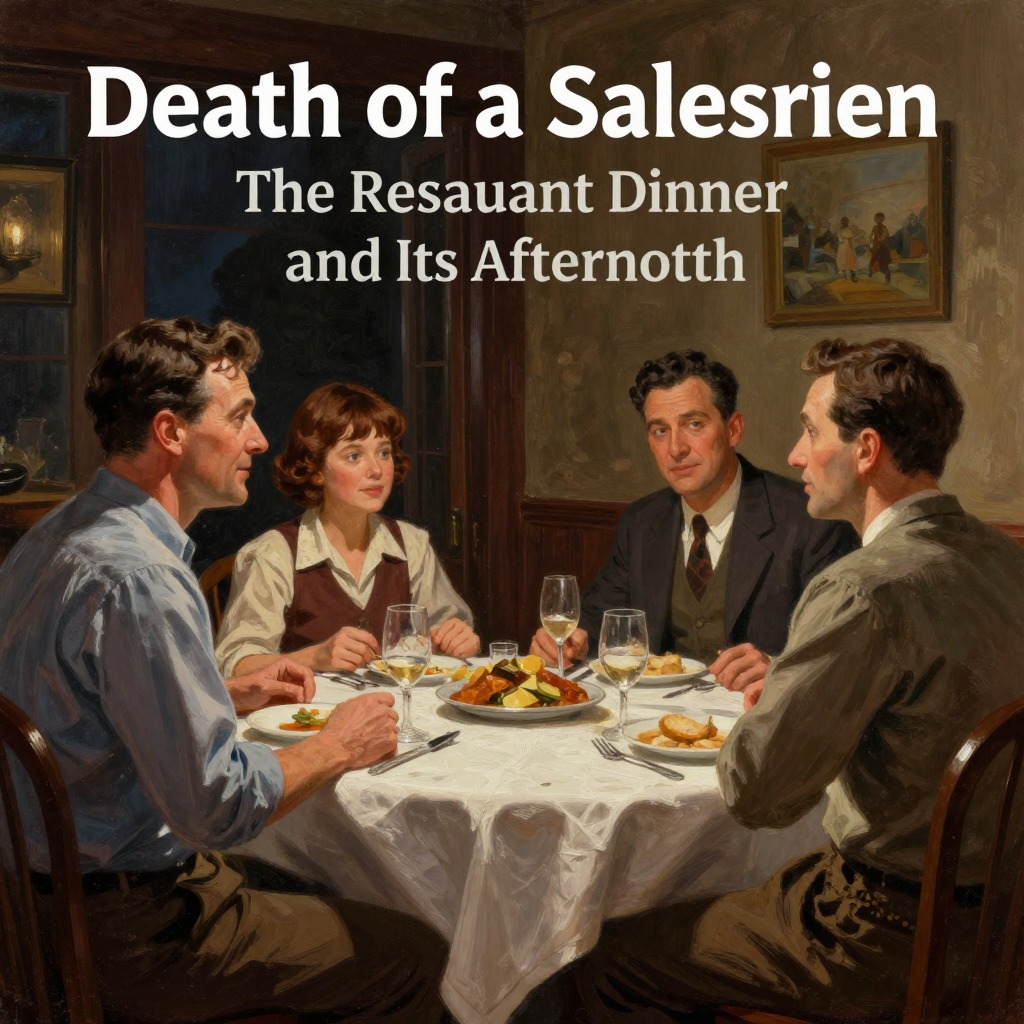
In Act Two, Happy Loman uses the New York Giants as a tool for seduction and self-aggrandizement. When he and Biff meet two women at Frank's Chop House, Happy introduces Biff by claiming, "Biff is quarterback with the New York Giants." This is a complete fabrication—Biff never played professional football. The lie is a desperate attempt to project an image of success and glamour that the Loman brothers utterly lack. It reveals how the dream of athletic glory has degraded into a cheap con, a story told to impress women in a restaurant. Biff, who has just failed to secure a loan from Bill Oliver and is grappling with the reality of his life, does not correct his brother. The lie hangs in the air, a hollow echo of Willy's once-grand ambitions, now reduced to a pickup line. The New York Giants, in this context, become a symbol not of achievement but of the family's willingness to trade in falsehoods to maintain a facade of success.
The Giants and the Unattainable Dream
The New York Giants ultimately represent the unattainable nature of the Loman family's aspirations. Biff was a high school football star, but he never became a professional athlete. The Giants are the team of the city, the pinnacle of the sport, and a goal that remains forever out of reach. Happy's lie about Biff playing for them is a pathetic attempt to claim a piece of that glory, but it only highlights how far the Lomans have fallen from their imagined greatness. The team stands as a silent rebuke to the family's belief in the power of being "well-liked" and personally attractive—qualities that, in Willy's philosophy, were supposed to open every door. The Giants, a real institution of professional success, remain indifferent to the Loman family's dreams, just as the business world has rejected Willy and Biff. The team's name, evoking size and power, contrasts sharply with the small, fragile, and hemmed-in world of the Loman house.